
 Tours
 Soft Adventure
 Stargaze
 Dark Sky Astro Experience
 Snowshoe
 Hiking
 Fishing
 Photography
 Activities
 Food and Drink Tours
 Weddings
 Groups
 RMNP Webcam
 Dark Sky Hub
Winter Stargazing in Colorado: The Cold Weather Playbook
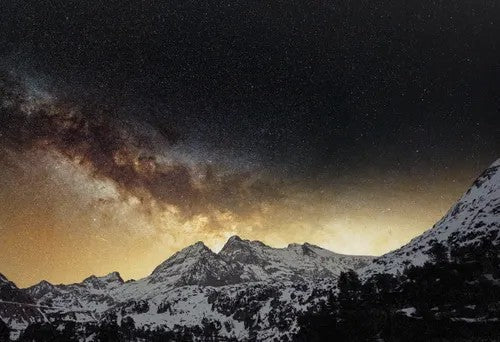
Winter stargazing in Colorado is the best kept secret in the state. The summer crowds are gone, the air is cold, dry, and steady, and the skies are the clearest of the year. Darkness comes early, so a full night of stars starts at dinner time. The only price is the cold, and the cold is manageable if you treat it as the main problem to solve. This is the playbook.
Dress like you are going skiing
This is the first rule and the one people get wrong most often. Winter nights in Estes Park commonly run in the teens and 20s, and standing still under a clear sky feels colder than the thermometer says. Dress like you are going skiing: a warm base layer, an insulating mid layer, a windproof outer layer, a hat, gloves, and warm boots. Bring hand warmers and a blanket. The people who see the most on a winter night are the people who dressed for it.
The trick is to dress before you get cold, not after. Put every layer on while you are still warm from the car. Keep moving between looks through the telescope, and bring more gloves than you think you need. A spare dry pair in a pocket is worth more than any piece of gear.
The cold is a problem for your gear too
Your optics suffer in winter just like you do. The most common problem is fogging: warm breath on a cold eyepiece, or a telescope brought straight from a warm car into freezing air, will fog up and stay fogged. Let your telescope and binoculars acclimate to the outside temperature first, and keep your face slightly away from the eyepiece when you breathe.
Batteries are the second casualty. Cold drains camera and phone batteries fast, sometimes to half their normal life. Keep spares in an inside pocket against your body, and swap them in warm. If you are photographing, bring two batteries and expect to use both.
Frost is the third problem. On a still, clear night, frost forms on lenses, tripods, and anything left out. Wipe lenses only with a clean lens cloth, never with a glove, and do not breathe on a frosted lens. That just adds more moisture.
Driving and getting there
Winter roads change the plan. Trail Ridge Road is closed in winter, usually from mid-October to late May, so the high overlooks are off the list. In 2026 it closed on October 23. The lower stargazing spots stay open and accessible: Sprague Lake, Moraine Park, and Horseshoe Park all work beautifully in winter, with the added magic of moonlight on snow. The Cub Lake Trail is a longer winter walk for hikers prepared for snow and ice, 2.3 miles one way from the trailhead off Fern Lake Road. Check road conditions before you go, and carry traction for icy parking lots and paths.
Give yourself extra time. Winter driving means slower speeds, icy patches in the shade, and parking lots that are not plowed to summer standards. Check the road conditions before you leave, and tell someone where you are going. If a storm is coming, the clouds will hide the stars anyway, so pick another night.
The short night is a gift
Darkness comes early in December and January, so the sky is fully dark by early evening. A family outing can start at 6 PM and be home for dinner. No late nights required. That matters when the temperature is in the teens: a two hour session is plenty.
The winter sky rewards the short session. Orion dominates the evening, the Pleiades ride high in Taurus, and Sirius blazes low in the southeast, the brightest star in the sky. The Geminid meteor shower, peaking the night of December 13 to 14, is the best meteor shower of the year, with up to 150 meteors an hour under a perfectly dark sky. What is up in the winter sky is covered in our winter sky guide: https://estesparktourguides.com/blogs/news/winter-night-sky-rocky-mountain-national-park
Go with a guide on the coldest nights
The coldest nights are the clearest nights, and they are also the nights when having a guide matters most. Someone else picks the spot, reads the sky, and brings the telescope, the headlamps, and the warm drinks, while you just look up. Our Stargaze tour runs on clear winter nights in Rocky Mountain National Park: https://estesparktourguides.com/products/hikebyheadlamp
Quick answers
Is winter a good time to stargaze in Colorado? Yes, the best for clear skies. Cold, dry air gives the sharpest views of the year, and darkness comes early.
How cold does it get? Winter nights commonly run in the teens and 20s. Dress like skiing, bring hand warmers and a blanket.
Go with a guide
If you would rather go with someone who knows the trails, the sky, and the seasons, our guides lead trips in Rocky Mountain National Park and around Estes Park every day. See the guided tours and pick the one that fits your trip.
-
Posted in
Stargazing and Night Sky